Fabric Types Explained: A Guide to Choosing the Right Fabric for Your Brand
Fabric Types Explained: A Guide to Choosing the Right Fabric for Your Brand
Fabrics differ from one another in three main ways: (1) the fiber they are made from, (2) how the fabric is built, and (3) what is done to it at the end. The fiber decides how a fabric feels, how well it breathes, and how you have to look after it. Fibers split broadly into natural ones like cotton, linen and wool, and synthetic ones like polyester, nylon and spandex.
How the fabric is built splits into woven fabrics, which hold their shape and barely stretch; knitted fabrics, which are stretchier and more comfortable to wear; and nonwoven fabrics, which are mostly used for disposable products. The last factor is finishing, which covers dyeing, printing and softening treatments, and changes how the fabric looks, feels and performs all over again.
If you own a brand, here is the order that works in practice: start with the product and how it will be used → choose the fabric construction → choose the fiber blend → set the GSM and color → then compare prices and MOQ. Starting with price and working backwards is usually a mistake, because the cheapest fabric often is not the cheapest once you add up waste, shrinkage, production problems and customers who come back to complain.
This article covers how the main fabric types differ, how to read a fabric spec, how to pick fabric for different kinds of products, and what you should know before sourcing or ordering fabric in Thailand.
-------------------------------------------------------------------------------------
How Are Different Types of Fabrics Classified? Understanding the 3 Key Factors
The textile industry does not sort fabrics by brand names. It sorts them by three layers of properties that work together. Once you understand these three, you can read a fabric spec from any supplier and know exactly what you are looking at.
Factor 1: Fiber Type
The fiber is the raw material a fabric starts from, and it sets the basics: how the fabric feels, how much moisture it soaks up, how long it lasts, and how you have to wash it. Fibers split broadly into natural, synthetic and blended. The fiber is the one thing you cannot change later. Color and prints you can still adjust further down the line. Fiber you cannot.
Factor 2: Fabric Construction
Fabric construction is how yarns are turned into cloth, and it decides how much the fabric stretches, whether it holds its shape, and how it sews. Take the same fiber and build it two different ways and you get two completely different products. Woven cotton is what shirts are made from. Knitted cotton is what T-shirts are made from.
Factor 3: Finishing
Finishing is everything done to the fabric after it has been made, and it changes what the fabric ends up like. That covers dyeing, printing, softening, pressing for shine, and surface treatments. Finishing changes both how the fabric feels and the price per yard by a noticeable amount. It is also the step brands forget to write into the purchase order, which is how you end up with fabric that matches the spec on paper but does not feel the way you wanted.
-------------------------------------------------------------------------------------
What Is the Difference Between Natural and Synthetic Fibers?
The short version: natural fibers soak up moisture and breathe better, but they wrinkle more easily, can shrink, and take longer to dry. Synthetic fibers are stronger, hold their shape, dry fast and keep their color, but on their own they do not breathe or release heat as well. Which is why plenty of brands end up on a blend, to get some of both.
Natural Fibers
Natural fibers come straight from plants or animals. The ones you will run into most in the Thai fabric market are:
- Cotton — Soft, breathable, and soaks up a lot of sweat. It is the standard choice for T-shirts and bedding. The downsides are that it dries slowly, wrinkles easily, and can shrink after the first wash if it has not been pre-shrunk.
- Linen — The coolest of the natural fibers to wear, which makes it a good fit for summer products and premium pieces. The way it wrinkles is part of its character, but it costs more than cotton.
- Wool — Warm, and it springs back into shape well, which suits it to suits, sweaters and cold-weather clothing. It needs more careful washing.
- Rayon / Viscose / Bamboo Viscose — These count as regenerated or semi-synthetic fibers, made from wood pulp. They are smooth, they drape like silk, and they are easier on the budget, though they lose strength when they get wet.
Synthetic Fibers
Synthetic fibers are made from polymers, which means their properties can be controlled precisely and every lot comes out the same.
- Polyester — The most widely used fiber in the world. It is strong, dries quickly, holds its color and keeps costs under control, which makes it a good fit for sportswear and uniforms.
- Recycled Polyester / rPET — Behaves much like regular polyester, but you can trace where it came from when it comes with a certification such as GRS. International buyers are asking for it more and more.
- Nylon/Polyamide — Stands up to rubbing and scuffing better than anything else in this group, which is why it is used for bags, swimwear, and sportswear that gets pulled and stretched.
- Spandex/Elastane — Never used on its own. It gets blended in at around 3–10% to add stretch and spring-back.
Blended Fibers
A blend puts two or more fiber types into the same fabric so that each one covers the other's weak spots. The two you will see most in Thailand are CVC, where cotton is the dominant fiber, for example 60% cotton and 40% polyester. CVC feels close to cotton while wrinkling less. The other is TC, where polyester is the dominant fiber, for example 65% polyester and 35% cotton. TC lasts longer, is easier to look after, and costs less.
Both CVC and TC are trade names rather than fixed standards with one set ratio. So always ask your supplier to confirm the exact percentages. Another common blend is polyester with spandex for sportswear. Even a 10% difference in the mix noticeably changes how a fabric feels and what it costs, so always compare swatches before you decide.
Comparison of Commonly Used Fibers
| Fiber | How It Feels | Breathability | Durability | Shrinkage | Cost | Best Suited For |
| Cotton |
Soft | Very high | Medium | High | Medium | T-shirts, bedding, towels |
| Linen |
Crisp, natural texture | Highest | Medium | Medium | High | Summer clothing, premium products |
| Rayon / Viscose |
Smooth, fluid drape | High | Low–Medium | High | Medium | Dresses, drapey shirts |
| Wool |
Warm, resilient | Medium | High | Medium | Very high | Suits, sweaters, outerwear |
| Polyester |
Smooth | Medium | High | Very low | Low–Medium | Sportswear, uniforms, curtains |
| Recycled Polyester |
Similar to conventional polyester | Medium | High | Very low | Medium | Sustainability-focused products |
| Nylon |
Smooth, tough | Medium | Highest | Low | High | Bags, swimwear, outdoor products |
| Spandex / Elastane (Blend) |
Stretchy, springs back | Stretchy, springs back | Medium | Low | High | Sportswear, leggings, underwear |
-------------------------------------------------------------------------------------
What Is the Difference Between Woven, Knitted, and Nonwoven Fabrics?
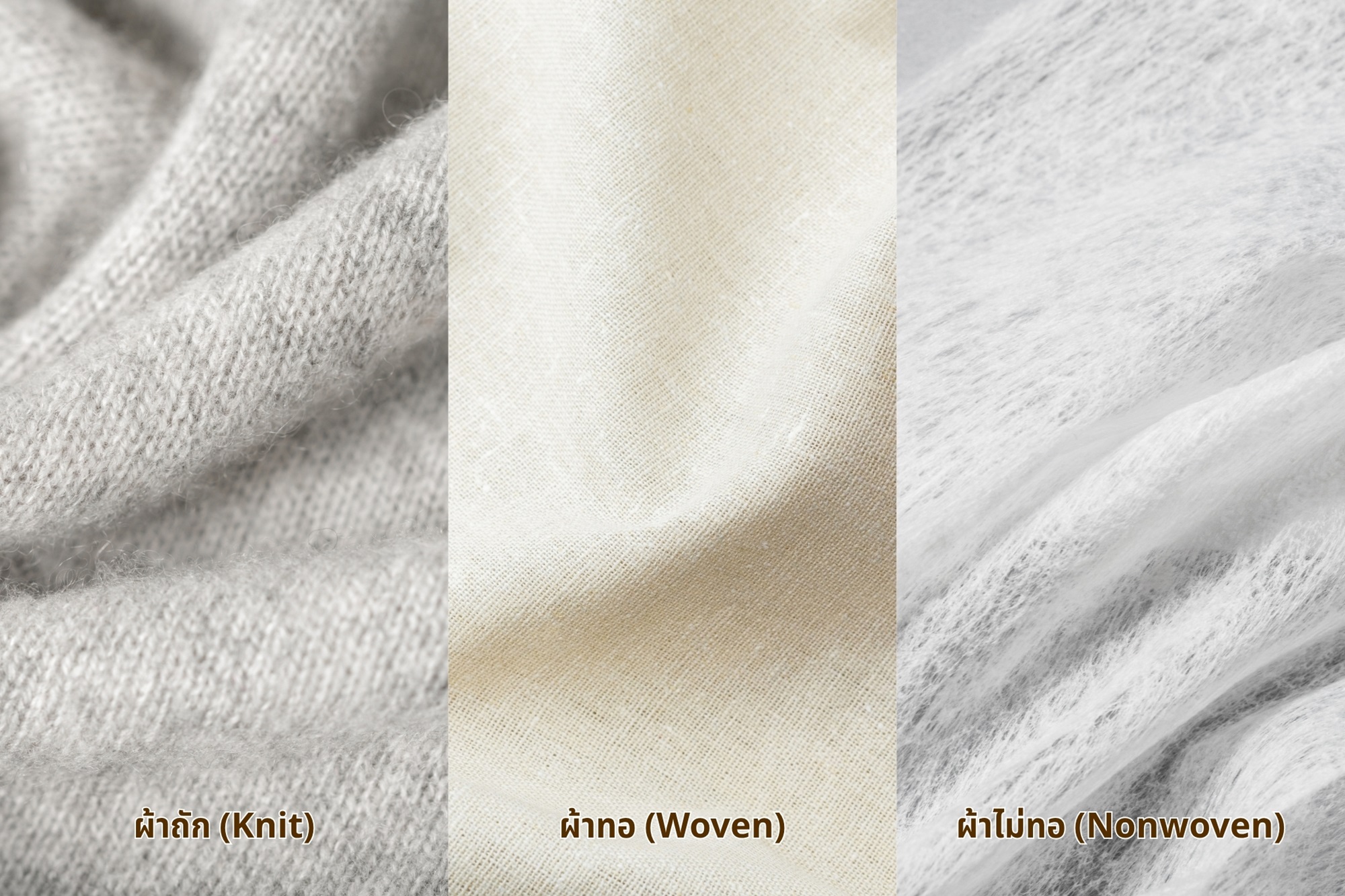
Woven fabrics are made by crossing vertical and horizontal yarns over and under each other at right angles, so they hold their shape and barely stretch. Knitted fabrics are made by looping yarn through itself, which makes them stretchier and more comfortable to wear. Nonwoven fabrics are made by bonding fibers together without weaving or knitting at all, and are mostly used for disposable products. Picking the wrong construction is the mistake you cannot easily fix later, because it changes your pattern and the whole sewing process.
Comparison of the 3 Main Fabric Structures
| Category | Woven Fabric | Knitted Fabric | Nonwoven Fabric |
| Stretch |
Low — mainly stretches if pulled diagonally | High | Very low |
| Shape Retention |
High | Medium | Low |
| Common Examples |
Poplin, twill, Oxford, denim | Single jersey, rib, interlock | Spunbond, meltblown |
| Common Applications |
Shirts, trousers, uniforms | T-shirts, sportswear, underwear | Masks, gowns, cleaning wipes |
| Typical Unit Cost |
Medium–High | Medium | Low |
-------------------------------------------------------------------------------------
How to Read Fabric Specifications: What Are GSM, Yarn Count, and Denier?
The numbers on a fabric spec are how suppliers tell you how heavy, how thick and how fine a fabric is. Once you can read them, you can compare quotes fairly. If a quote does not spell these out, you are probably comparing fabrics of different grades without realizing it.
GSM (Grams per Square Meter)
GSM is what a square meter of the fabric weighs. The higher the number, the heavier and thicker the fabric. It is one of the numbers that affects how a fabric feels and what it costs the most. Common ranges include:
- Lightweight everyday T-shirts: approximately 140–160 GSM
- Standard T-shirts that hold their shape better: approximately 180–200 GSM
- Heavyweight oversized T-shirts: approximately 220–260 GSM
- Towels: approximately 400–600 GSM
- Hoodie / sweatshirt fabrics: approximately 280–350 GSM
Yarn Count
In the cotton yarn count system, yarn count tells you how fine the yarn is — the higher the number, the finer the yarn and the smoother the fabric. For example, 20s cotton yarn gives you the dense body of a normal T-shirt, while 30s or 40s yarns give you something finer and smoother, and cost more.
Denier
Denier is used for synthetic filament yarns, and tells you what 9,000 meters of that yarn weighs in grams. The higher the denier, the thicker and heavier the yarn. You will see it a lot on nylon used for bags, outdoor gear and jackets, such as 210D or 600D.
Fabric Width
Fabric width is how wide each roll is, and it decides how many pieces you can cut out of every yard or meter. Common widths are 44 inches and 58–60 inches, while some knitted fabrics come in a tube. A fabric with a lower price per yard can work out more expensive per finished product if it is narrower. So compare cost per finished piece, not just cost per yard.
How to Choose Fabric for Different Product Types
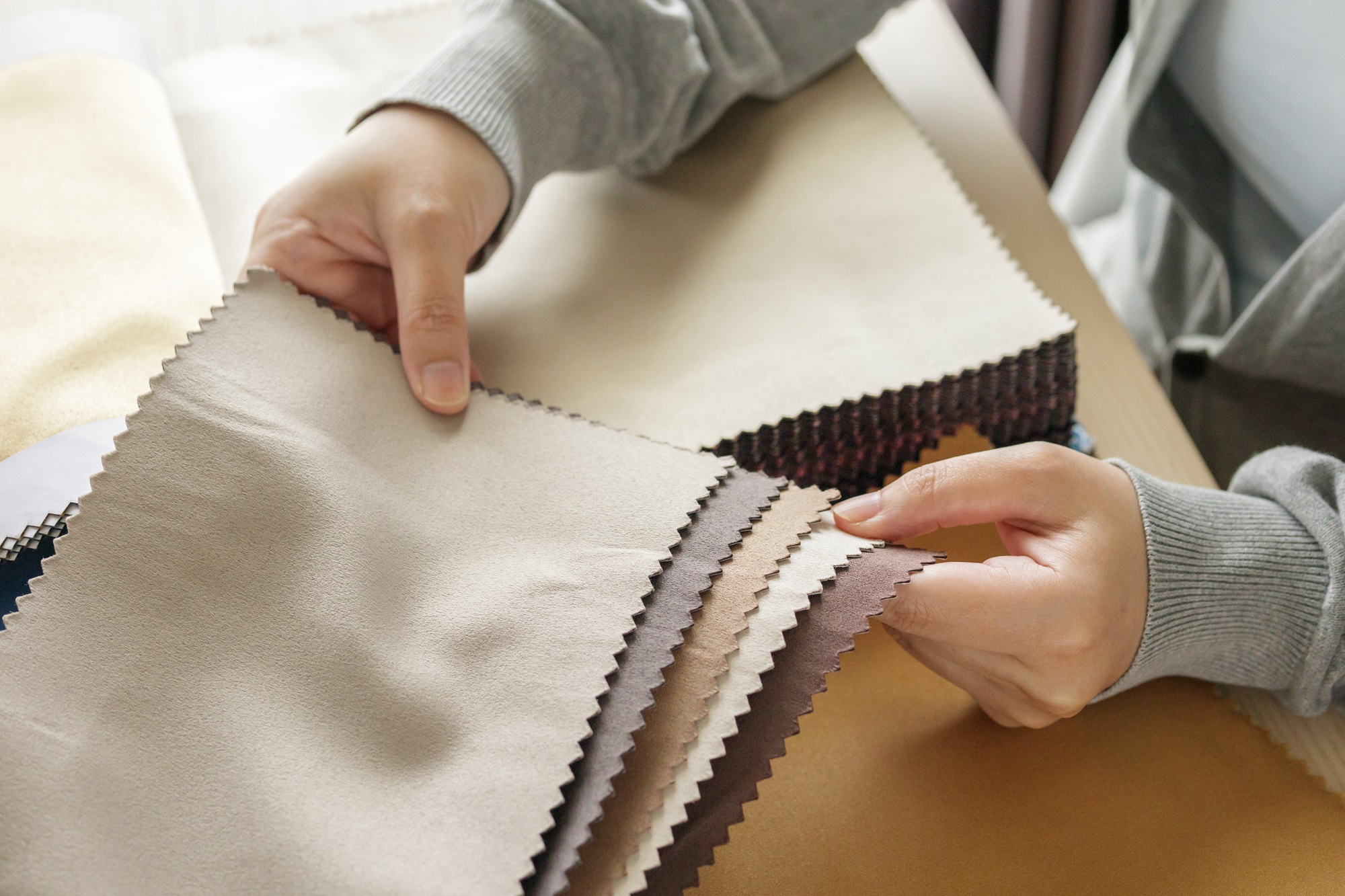
The key is to work backwards from how the product will actually be used: how often it gets washed, how much stress the fabric has to take, and the climate the person using it will be in. The table below is a practical starting point for most brands in Thailand, before you fine-tune it for your own customers.
Fabric Selection Guide by Product Type
| Product Type | Recommended Construction | Common Fiber Composition | Recommended GSM Range | Key Considerations |
| Standard Brand T-shirts |
Knit (Single Jersey) | 100% Cotton or CVC (cotton-rich) | 180–220 | Shrinkage after washing, neckline stretching |
| Oversized T-shirts |
Knit | Dense / heavyweight cotton | 220–260 | Noticeably higher cost per piece |
| Sportswear / Activewear |
Knit (Interlock, Mesh) | Polyester + Spandex | 150–220 | Color running when it meets sweat, losing stretch |
| Employee Uniforms |
Woven (Twill, Poplin) | TC (polyester-rich) | 160–240 | Color coming out different from lot to lot |
| Bedding |
Woven (Percale, Sateen) | Cotton or CVC | 120–200 | Yarn count and how densely it is woven |
| Towels |
Terry | Cotton, Cotton + Bamboo | 400–600 | Absorbency, linting |
| Bags / Outdoor Products |
Woven | Coated Nylon or Polyester | Specified by Denier | Tensile strength and seam durability |
| Disposable / Medical Products |
Nonwoven | Polypropylene, Rayon blends | 20–70 | End-use standards and regulatory requirements |
-------------------------------------------------------------------------------------
5 Common Mistakes When Ordering Fabric for the First Time
Most mistakes do not come from picking the wrong type of fabric. They come from not spelling out every requirement in the purchase order. The five below come from working with brands, not from a survey.
- Comparing price per yard instead of cost per finished piece — A cheaper fabric that is narrower or lighter can end up costing you more per garment.
- Not testing shrinkage before the main production run — This matters most with cotton and knitted fabrics. Wash your samples the way your customers will actually wash them, then confirm the pattern.
- Not approving the color in writing — Color drifts between production lots. Approve a lab dip, and keep an approved color sample on both sides.
- Underestimating lead time — Making the fabric often does not include dyeing, finishing and shipping. Plenty of brands plan a launch date off garment production time alone.
- Not asking for certifications from the start — If you plan to sell to corporate customers or export, ask for every relevant certification before you place the order. In many cases they cannot be issued after production is already finished.
How to Choose a One-Stop Fabric Supplier Without Having to Switch Suppliers Later
A one-stop fabric supplier is one that can support your brand all the way through, from choosing the spec and sourcing across several fabric categories, to developing specialty fabrics, sorting out certifications, and delivering on your production schedule. It means you are not chasing several suppliers once you have more than one product line, and you are not dealing with quality that shifts depending on who supplied it.
Key criteria to look for:
- Genuinely offers a range of fabric types, rather than reselling a limited selection
- Gives you technical guidance, not just a quotation
- Can provide certifications and show you where the fabric came from
- Is straight with you about MOQ and lead time from the start
- Can develop specialty fabrics as your brand grows
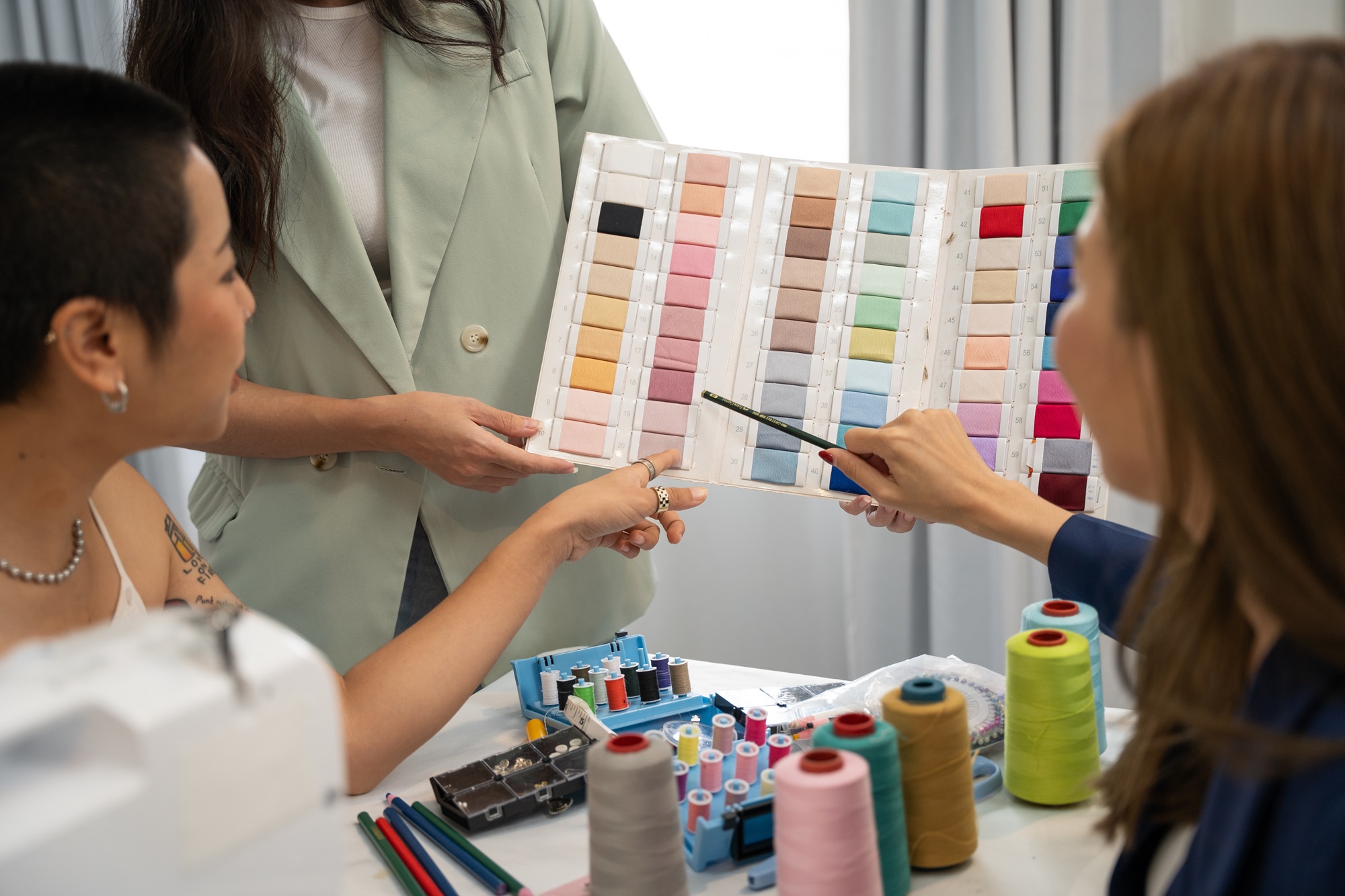
BCL 2002 is a fabric supplier in Thailand that works with brands and garment manufacturers from the fabric specification stage through to sourcing and delivery on your production schedule. If you are planning to source fabrics in Thailand or develop specialty fabrics for your brand, contact our team for guidance on specs and for fabric samples.
-------------------------------------------------------------------------------------
Frequently Asked Questions (FAQ)
What Fabric Should I Use for a T-Shirt Brand?
The most common choice is Single Jersey knit in 100% cotton or CVC, at around 180–220 GSM. Pure cotton feels softer and breathes better, but shrinks more. CVC wrinkles less, holds its shape better, and copes better when customers wash the garment often. If this is your first collection and you are still deciding, order samples of both, wash them, and compare.
What GSM Is Considered a Heavyweight Fabric?
For T-shirts, anything above 220 GSM is generally considered heavyweight. Around 140–160 GSM is lightweight, 180–200 GSM is the common market standard, and 220–260 GSM is what usually gets used for heavyweight or oversized T-shirts. That said, the right GSM depends on what you are making. 400 GSM is only around entry level for a standard towel, while a 400 GSM T-shirt would be far too heavy for Thailand's climate.
What Is the Minimum Order Quantity When Buying Fabric in Thailand?
It depends on whether you are buying ready-stock fabric or having it made to order. Fabric already in stock can often be ordered in quantities from tens to hundreds of yards, while custom-dyed fabrics or newly developed specialty fabrics usually carry much higher MOQs, often counted separately per color. Bring up MOQ and lead time in your first conversation, because both of them will move your launch date.
Which Is Better: Cotton or Polyester?
Neither is better on its own; it depends on what you are making. Cotton wins on softness and breathability, which suits everyday clothing and bedding. Polyester wins on durability, drying speed, holding its color and holding its shape, which suits sportswear and uniforms that get washed constantly. If you need a bit of both, blended fibers are one of the most widely used answers in the market.
What Is a Specialty Fabric, and How Is It Different from Standard Fabric?
A specialty fabric is developed to meet specific requirements, rather than sold as a standard, ready-made fabric. What makes it specific might be a custom fiber blend, a particular knit or weave construction, a fabric weight you set yourself, or a specialized finishing treatment. The upside is that your product stands apart and competitors cannot easily copy the spec. The trade-off is usually a higher MOQ and a longer wait while it is developed.
What Documents Should I Request from a Fabric Supplier?
At minimum, you should have a fabric specification sheet, an approved fabric sample, and any certifications that matter in the market you are selling into. The ones buyers ask for most are OEKO-TEX® STANDARD 100, which tests finished textiles for harmful substances, GRS for recycled materials, and GOTS for organic textiles.
One area brands often get wrong is how GRS works: GRS certification can apply to business-to-business products containing at least 20% recycled material, while products carrying consumer-facing GRS labeling generally need to contain at least 50% recycled content. If you plan to sell to corporate customers or export, spell out your document and certification requirements before production begins..
Should I Choose the Fabric First or Design the Product First?
Decide the product direction first, then choose the fabric alongside developing the pattern. What a fabric does — how much it stretches and how much it shrinks especially — feeds straight into the pattern. Finishing the whole design before you go looking for fabric usually means going back to revise the pattern later, or ending up with a garment that does not sit the way you drew it.
-------------------------------------------------------------------------------------
Note: The GSM ranges, yarn counts, denier values, fabric widths, fiber comparison tables, product-specific fabric recommendations and common sourcing mistakes in this article are based on industry practice and practical observation, not on one universal standard. The values overlap and vary by mill, supplier and production period. Use them as a starting point for conversations with fabric suppliers, rather than as fixed acceptance criteria.