How Is Medical Grade Fabric Different From Regular Fabric? A Guide to Choosing the Right Fabric for Your Scrub Brand

How Is Medical Grade Fabric Different From Regular Fabric? A Guide to Choosing the Right Fabric for Your Scrub Brand
Medical grade fabric differs from regular fabric in what it's tested for, not in whether the fabric's better. It isn't a fabric type or a quality grade, and no agency in Thailand certifies any fabric with this term. That means most scrubs don't need fabric called this at all. What scrub brands actually need isn't the term medical grade — it's fabric that survives hospital-style washing without fading or turning see-through. That's an entirely different problem. This guide covers 6 things to give you the full picture.
- Where medical grade fabric differs from regular fabric, and what this term can mean on a quote
- The line between textiles that are medical devices and fabric that's just used in hospitals
- Why hospital fabric wears out faster than regular workwear fabric
- Turning see-through when you bend, and stains that won't come out — the two complaints end customers raise the most
- Antibacterial and odor-reducing claims that often get mixed up
- Whether to pick fabric that's already on the market, or develop your own brand spec
This guide is written specifically for scrubs and hospital uniforms. It doesn't cover every medical textile, and it's meant to give you the picture, not something to memorize. You don't need to remember standard names or numbers — choosing the test method, requesting documents, and checking fabric before production is your fabric supplier's job, not the brand's. All the brand needs to know is how the product will be used, and who does the washing.
-------------------------------------------------------------------------------------
What "Medical Grade" Can Mean on a Fabric Quote

The term medical grade has no matching technical definition across the industry. Two fabrics called by the same term can differ from regular fabric in completely different ways, or not differ at all. Sometimes it means fabric that's passed a liquid penetration test. Sometimes it means fabric with an antibacterial test report. Sometimes it just means a color that's popular in hospitals. The table below isn't for memorizing — it shows how many meanings one term can hide.
Common Terms on a Fabric Quote, and What's Really Behind Them
| Term the seller uses | What it can actually mean | Who should check it |
| Medical grade fabric |
Anything from fabric with real test reports to fabric that's just commonly bought by hospitals |
Your fabric supplier, since they have access to the mill's documents |
| Medical fabric | Usually refers to fabric used in healthcare settings generally, without naming a specific property | Your fabric supplier, together with the brand explaining what product it's for |
| Health fabric | A marketing term with no technical definition behind it | Your fabric supplier, since they need to check what actually backs up this term |
| Antibacterial fabric | Can come from a fabric finish or from the fiber itself, and these hold up to washing differently | Your fabric supplier, since they need to check the test conditions and wash cycle count |
| Waterproof fabric | Can mean water beading on the surface, or resisting water pressure — two different things | Your fabric supplier, since they need to match it to how it's actually used |
For scrubs, the answer is you don't need fabric called medical grade, because scrubs aren't a fluid barrier the way a surgical gown is. What scrub fabric actually needs is to hold up to washing far more often and hotter than regular clothing, stay wearable through long shifts without overheating, and not turn see-through when you bend or stretch. That's why brands in Thailand's fabric market often pay extra for this term, then still run into fading and see-through fabric later.
-------------------------------------------------------------------------------------
Scrubs Aren't a Medical Device, But Surgical Gowns Are — What This Means for Your Brand

What makes a product a medical device under Thai law isn't the fabric type — it's the intended use the manufacturer declares on the label and product documents, under the Medical Device Act B.E. 2551 (2008). The Medical Device Control Division states that whether a product counts as a medical device comes down to its label, instructions for use, and accompanying documents. Scrub brands trip on this easily, because one line on a tag can move a product into a category that needs supporting documents, unintentionally.
On the clear medical-device side, the Thai FDA has issued standards for two textile categories: single-use medical face masks, and medical gowns, covering both Surgical Gowns and Isolation Gowns, both notified medical devices with their own specific standards. On the industrial side, the Thai Industrial Standards Institute sets TIS 2424-2565 for single-use face masks, split into general-use and medical-use levels 1 through 3. One point people often mix up: this TIS standard is voluntary, while Thai FDA notifications are mandatory for manufacturers and importers.
Hospital Textiles Split Into Two Groups, and Who Handles Which Part
| Group | Example products | Legal status | Who handles the documents |
| Textiles acting as a barrier |
Surgical gowns, surgical drapes, medical face masks | Falls under the medical device system, with its own specific standards | The product owner follows the Thai FDA process, with the fabric supplier helping on raw material documents |
| Textiles worn for work |
Scrubs, staff uniforms, patient gowns, bedsheets | Regular clothing, not part of the medical device system | The fabric supplier sources test reports based on how the brand says it'll be used |
This affects the wording on tags and product pages. Writing that fabric has a certain property backed by a test report is completely different from writing that a product prevents disease. The second kind of claim edges toward declaring a medical purpose, and also falls under the Consumer Protection Act B.E. 2522 (1979), which adds another layer of oversight on misleading advertising. In practice, the brand doesn't need to work out which wording is allowed — just send it to your fabric supplier to check against the real documents before printing the tag.
-------------------------------------------------------------------------------------
Why Hospital Fabric Wears Out Faster Than Regular Workwear Fabric
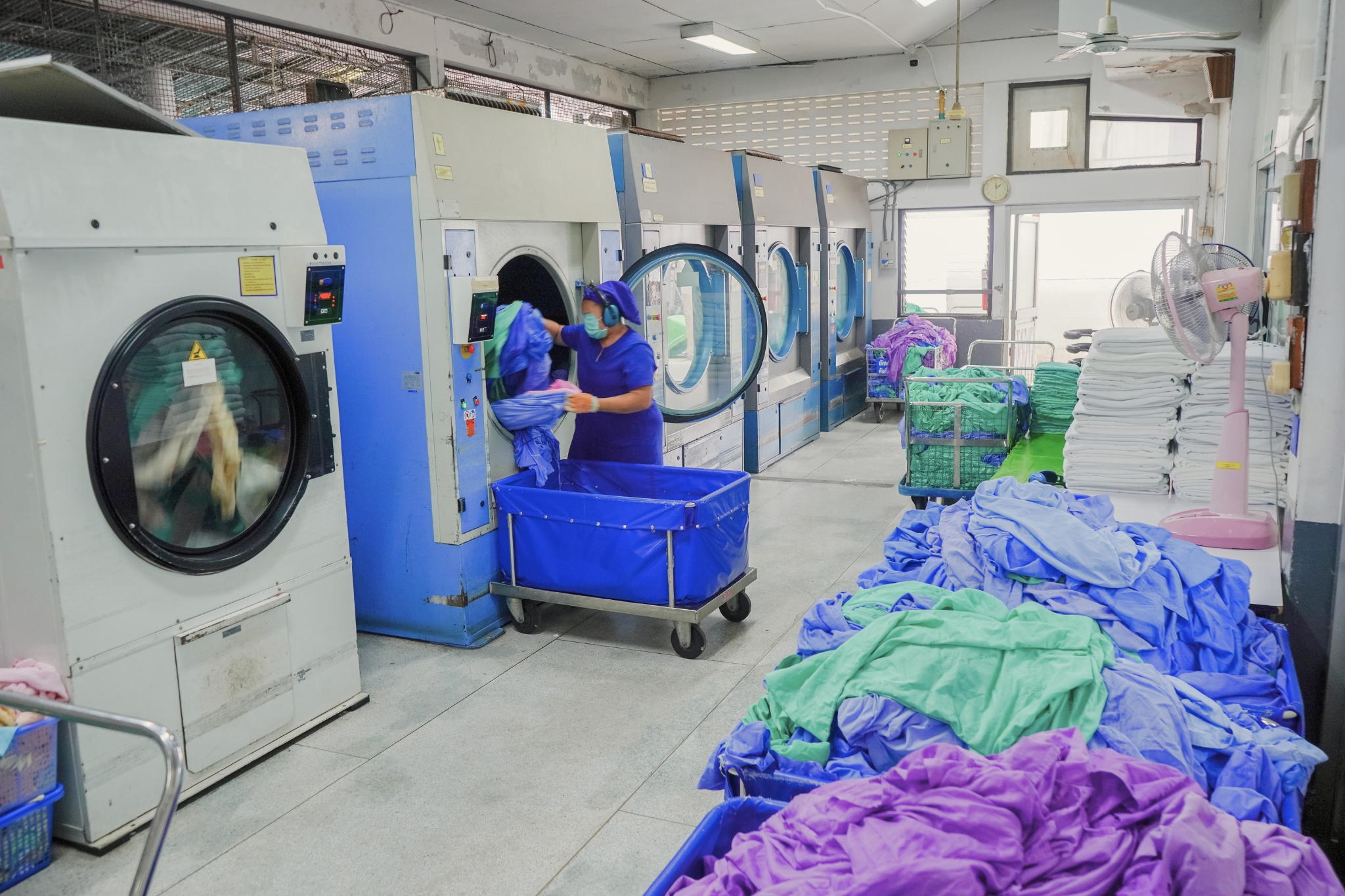
The real challenge for scrub and hospital uniform fabric is washing, not germ resistance — this fabric gets washed more often, hotter, and with far harsher chemicals than regular clothing. This isn't an opinion — it's built into the standard itself. ISO 105-C06, used to test color fastness to washing, states that industrial and hospital items may need a harsher wash process than normal washing. Fabric that's already passed a household-style wash test can still fail once it hits a hospital.
End customers mostly run into a handful of complaints: color fading or shifting after a few months, blotchy spots after bleach exposure, discoloration at the collar and underarms, pilling in high-friction areas, and fabric so thin it tears at the knees and seat. Each has its own test method, plus two simulated wash processes to choose from — household under ISO 6330, industrial workwear under ISO 15797. Which to use depends on whether end customers wash it themselves, hire a laundry service, or send it through the hospital's central laundry.
The brand doesn't need to know which complaint matches which standard. Just say who wears it, what kind of work they do in it, and how it gets washed — that's enough for your fabric supplier to pick the right fabric and documents.
-------------------------------------------------------------------------------------
Turning See-Through When You Bend, and Stains That Won't Come Out — The Two Complaints Customers Raise Most
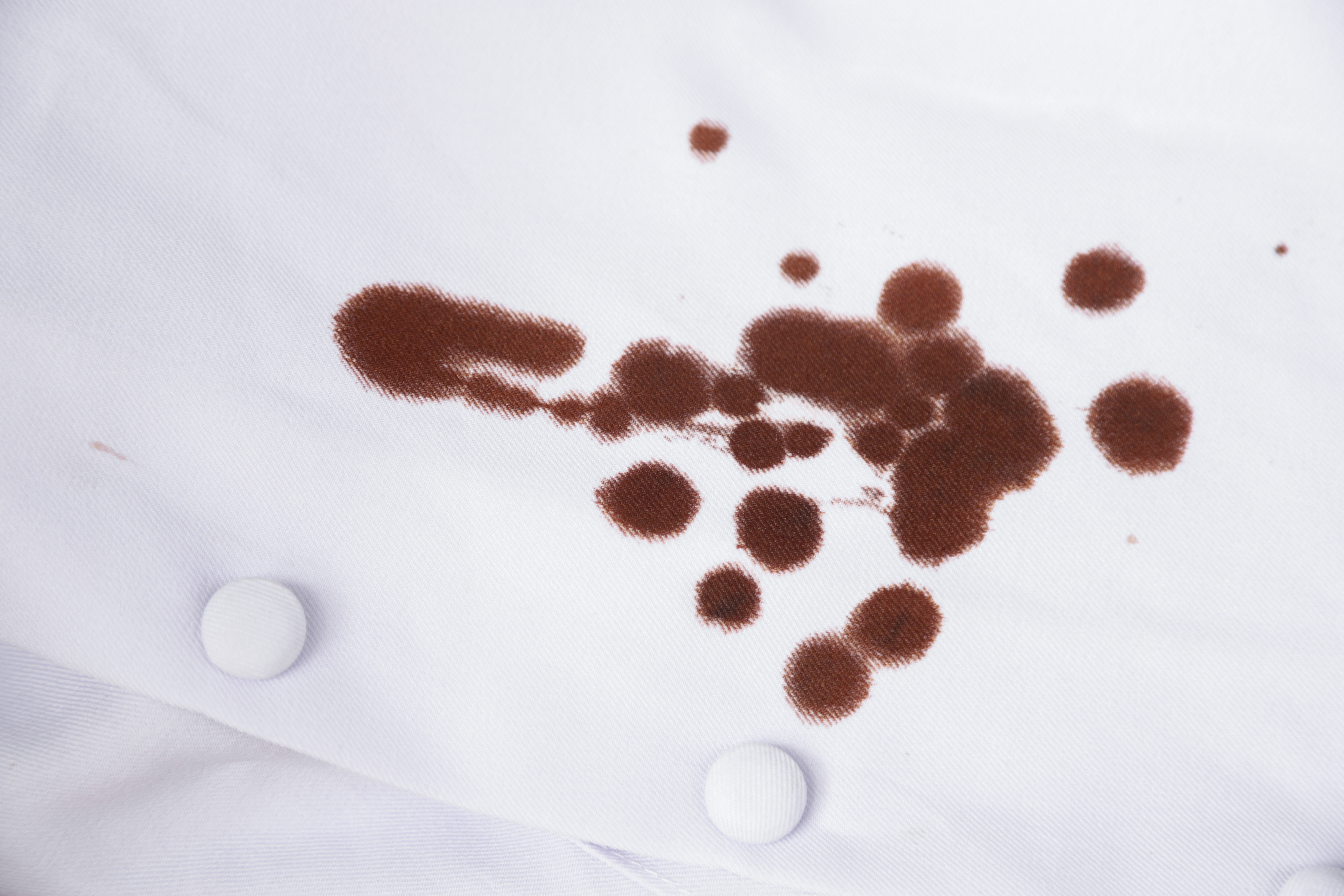
Whether fabric turns see-through and whether it shows stains are two completely different things, and no single standard test covers both. How see-through fabric gets depends on how much light passes through it — the weave's tightness, fabric weight, dye color, and how much delustering agent is in the synthetic fiber. Showing stains, on the other hand, is about fabric changing color intensity in specific spots once wet. So a fabric can resist turning see-through well but still stain visibly, and a stain-resistant fabric can still turn see-through once stretched.
Neither has a central standard to point to, so you can only judge from the actual fabric — check it in the lightest color in the collection, since that's the highest-risk color. This is easy to do before ordering the full production run, and should get settled while choosing fabric, not after production is done. In practice, the brand just lists the collection's colors, then has the fabric supplier pull samples of the highest-risk color for everyone to review together.
-------------------------------------------------------------------------------------
Antibacterial and Odor-Reducing Claims That Often Get Mixed Up

Antibacterial and odor-reducing are two separate properties, measured by two separate methods, and one can't stand in for the other. Antibacterial means slowing bacterial growth on the fabric under specific test conditions, measured with methods like ISO 20743 or AATCC 100. Odor-reducing means cutting certain odor-causing compounds, measured under ISO 17299. So a report on one property doesn't mean the fabric does the other, and neither equals sterilizing the fabric, which is a finished-product process, not a fabric property.
What makes this trickier is that these properties fade with washing, at different rates depending on whether the fabric gets the property from a finish or from the fiber itself. A test report only means something if it states whether testing happened before washing or after a set number of wash cycles, and whether it tested the same color and weight you're actually ordering. Reading through this level of detail is your fabric supplier's job, on the brand's behalf — not something the brand owner needs to chase down.
-------------------------------------------------------------------------------------
You should either order fabrics that are already available in Thailand or develop fabrics to the brand's own specifications.
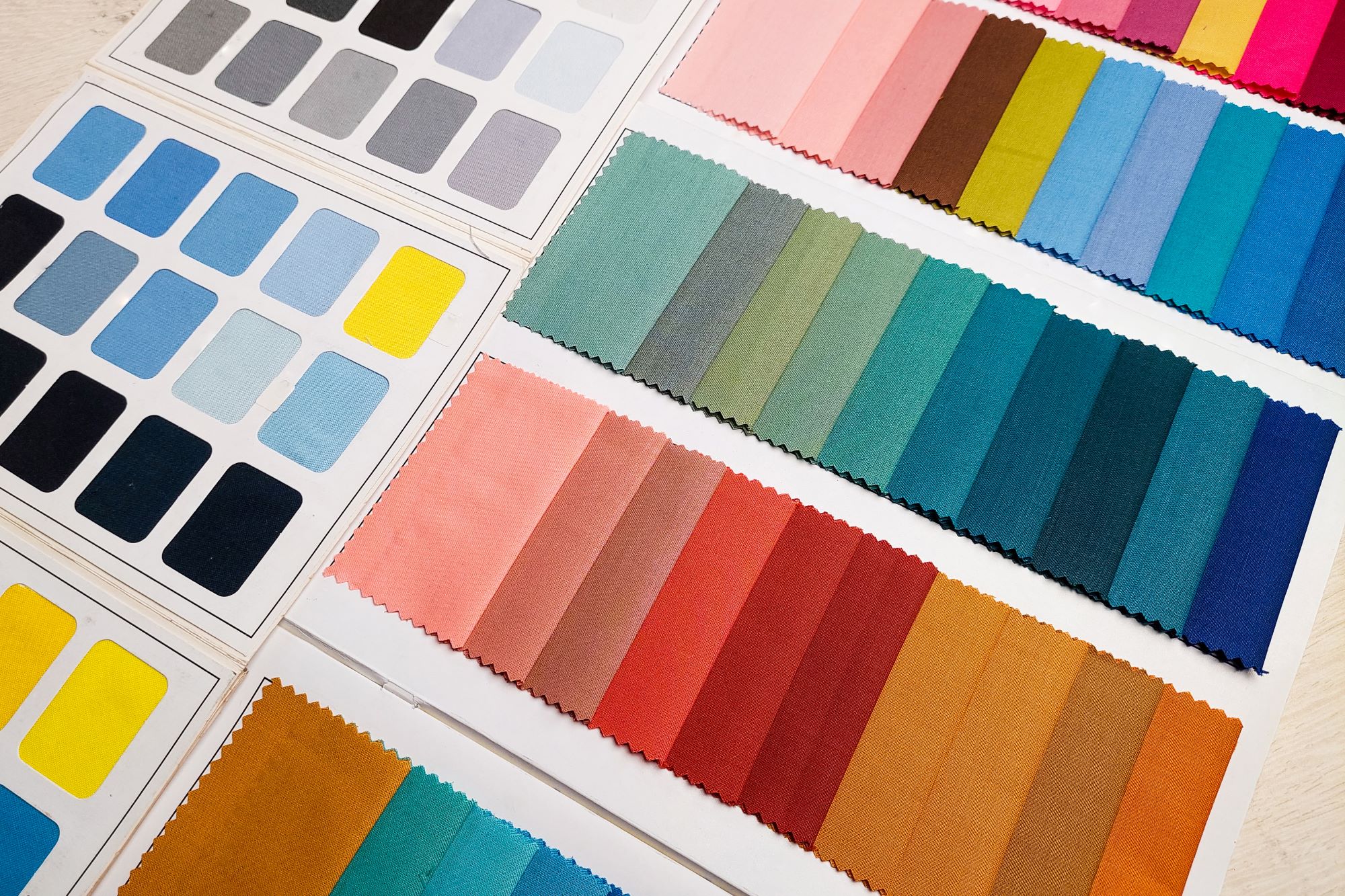
If the priority is color, cut, and price, picking from existing fabric gets you there much faster. But if the priority is several specific properties that all need to come together at once, developing your own brand spec pays off more long-term. The deciding factor is how many properties you need at once, and how often you reorder. A brand ordering every quarter gets more value from a custom spec than a brand ordering once a year.
Whichever way you go, the same step applies: get fabric samples cut into one real set, then have an actual user wear it through a full shift before confirming full production. Every property above gets measured on the fabric itself, but the wearer experiences fabric with seams, pockets, and elastic already built in. MOQ and lead time vary by fabric type and color, so raise them in your first conversation.
-------------------------------------------------------------------------------------
Frequently Asked Questions (FAQ)
What Information Should I Prepare Before Reaching Out About Scrub Fabric?
You just need three things to start the conversation: who wears it, what kind of work they do in it, and how it gets washed. Bringing a sample of an old set you weren't happy with speeds things up even more, since it shows right away whether the problem was the fabric or the stitching. Your full-service fabric supplier handles all the standards and documentation.
What's the Difference Between Medical Grade Fabric and Health Fabric?
Both terms are marketing language with no technical definition behind them. The only difference is who they're aimed at. The first usually applies to products sold into healthcare facilities, alongside the term medical fabric. The second usually applies to general consumer products. So what matters isn't the name — it's what actually backs up the fabric.
Can Scrub Fabric and Hospital Uniform Fabric Use the Same Spec?
Yes, in many respects, since they face the same wash conditions. Where they differ is cut and stretch. Scrubs need more stretch since you're moving constantly. Some uniform roles, though, need a shape that holds and presses well, so fabric weight and construction usually differ — even though both need about the same resistance to color running.
I Want a Unique Fabric for My Scrub Brand — Where Do I Start?
Start by describing where you want your set to stand out from competitors, then talk fabric. You don't need a technical spec ready — turning what you want into one is a step your fabric supplier already handles. A picture of a set you like, your target customer segment, and your price range all speed things up.
-------------------------------------------------------------------------------------
BCL 2002 is a full-service fabric supplier in Thailand, carrying fabric for both general use and healthcare settings. We've worked with clothing brands and garment factories on everything from fabric selection and sourcing test reports to developing custom fabric for specific needs. Planning to order fabric in Thailand for a scrubs or uniform collection, or considering custom fabric manufacturing in Thailand to your own brand spec? Reach out and tell us what you need — we'll take it from there.
-------------------------------------------------------------------------------------
Limits of This Information
This guide names test methods to show how each property is measured, but doesn't state numeric pass/fail thresholds — the right threshold varies by product type and by agreement between buyer and seller. Standards and notifications referenced here can change, so check the current version from the issuing authority before citing them in trade documents. The guidance on turning see-through and showing stains comes from industry experience, not a standard set by any authority. This guide also doesn't state MOQ, lead time, or price, since these vary by fabric type, color, and timing.
-------------------------------------------------------------------------------------
References
- Medical Device Act B.E. 2551 (2008) and notified medical device data, Medical Device Control Division, Thai FDA
- Thai FDA notifications on medical gown standards and single-use medical face mask standards
- TIS 2424-2565 Single-Use Face Masks, Thai Industrial Standards Institute (revised from TIS 2424-2562)
- ISO 105-C06, color fastness to washing · ISO 105-N01, color fastness to hypochlorite bleaching · ISO 105-E04, color fastness to perspiration
- ISO 6330, domestic washing and drying procedures for textile testing · ISO 15797, industrial laundering procedures for testing workwear · ISO 12945, pilling · ISO 13938-1, bursting strength
- ISO 20743 and AATCC 100, antibacterial activity of textiles · ISO 17299, determination of deodorizing properties of textiles
- Department of Science Service article on medical PPE standards · Consumer Protection Act B.E. 2522 (1979)